


6 min read
Highlights:
Your customer loves the product. They scroll through images, read reviews, and even add it to the cart. Then they reach checkout, see the full price, pause for a second, and close the app.
This is one of the biggest silent killers of online sales in India.
High upfront payments stop customers from completing purchases, especially for electronics, furniture, fashion, and online courses. Instalment payments solve this exact problem by breaking large amounts into smaller, manageable payments.
With India’s BNPL market expected to reach ₹32.33 billion by 2029, instalment payments are no longer a nice-to-have feature. They are quickly becoming a checkout expectation. Businesses that offer flexible payment options see higher conversions, bigger cart sizes, and more repeat customers.
Instalment payments allow customers to split the total purchase amount into smaller payments spread across weeks or months.
Instead of paying ₹30,000 upfront for a laptop, the customer pays ₹5,000 every month for six months. The product is delivered immediately, while the payment happens gradually.
This model works especially well in India because credit card usage is still limited. Nearly 95% of customers do not have access to traditional credit cards. Instalment options open the door to this massive audience.
Real-life example:
An online furniture brand selling sofa sets priced at ₹45,000 introduces a 6-month instalment option. Customers who earlier hesitated now complete the purchase because the monthly amount feels affordable.
Customer-Funded Instalments
Customers pay interest charges on the split amount. For example, a ₹60,000 television becomes six monthly payments of ₹11,000 (totalling ₹66,000 at 20% APR). The customer bears the financing cost.
Business impact:
You receive full payment upfront, while the financing cost is handled by the customer.
Merchant-Funded Instalments (No-Cost EMI)
You absorb the financing cost to drive sales. The same ₹60,000 TV becomes six payments of ₹10,000 with no interest. Customers pay the original price; you invest margin for higher conversion and order value.
Real-life example:
During festive sales, many brands offer zero-interest instalments to increase conversions and beat competitors offering only upfront payments.
Business impact:
Lower margins per order, but higher overall revenue due to increased conversions and larger order sizes.
UPI AutoPay Instalments
NPCI’s UPI AutoPay enables recurring e-mandates for EMI collection up to ₹15,000 (₹1 lakh for insurance, securities, mutual funds. Refer NPCI for upper limit changes). Customers authorise automatic monthly deductions without credit cards crucial in India’s low credit card adoption environment.
Example:
An EdTech platform offering a ₹24,000 course collects ₹4,000 per month for six months through UPI AutoPay, without requiring credit cards.
Credit Line on UPI
Launched in 2023, this facility lets customers link pre-approved credit lines to UPI for instalment payments at any UPI-accepting merchant. You don’t need special integration if you accept UPI; you can receive Credit Line payments.
Example:
A fashion brand accepts UPI payments. Customers using UPI credit lines choose instalments at checkout without the merchant changing anything.
Fixed vs. Flexible Plans
Fixed plans maintain equal payment amounts. Flexible plans allow variable amounts or adjusted schedules. Most e-commerce businesses use fixed plans for simplicity.
The checkout flow remains straightforward:
For you as the merchant, third-party BNPL providers typically settle full payment within T+1 to T+3 days. The provider then manages collections and credit risk.
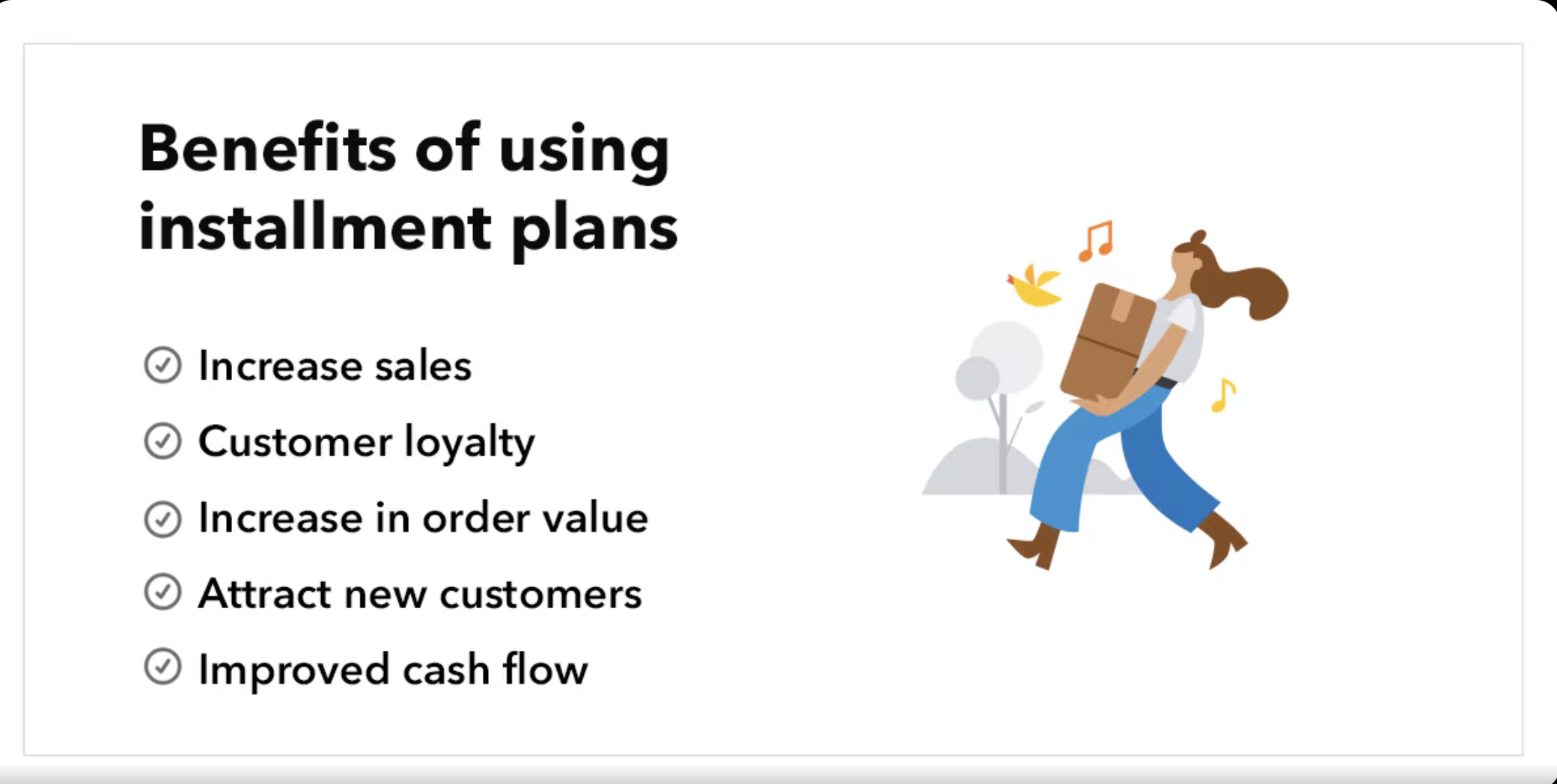
Affordability improves for high-ticket purchases. Budget management becomes easier with predictable monthly payments. No credit card requirement removes a major friction point.
Instalment payments have evolved from niche financing to a mainstream checkout necessity. With India’s ₹32.33 billion BNPL market projection by 2029, customer expectations now include flexible payment options at checkout.
For online sellers, the math is clear: 51% fewer abandoned carts and 30% higher order values directly impact your bottom line. Whether partnering with BNPL providers or leveraging UPI AutoPay, instalment payments transform affordability into revenue.
1. What is the difference between instalment payments and credit card EMI?
Instalment payments split purchases at checkout, often without requiring credit cards. Credit card EMI converts existing card purchases into monthly instalments after the transaction. UPI AutoPay enables EMI for ₹15,000-₹1 lakh transactions without cards, expanding accessibility.
2. How do merchants receive payment when offering instalment options?
In third-party BNPL models, merchants receive full payment upfront from the provider (typically T+1 to T+3 settlement), who then collects instalments from customers. In-house plans mean you collect payments monthly, impacting cash flow but reducing fees.
3. What are typical instalment payment tenures available in India?
Common tenures range from 3 to 12 months. Interest-free periods typically cover 3-6 months. UPI AutoPay supports recurring mandates for monthly, quarterly, or custom frequencies based on merchant category and transaction value.
4. What transaction limits apply to UPI-based instalment payments?
The standard UPI limit is ₹1 lakh per transaction. UPI AutoPay for recurring EMI allows mandates up to ₹15,000 for general categories and ₹1 lakh for specific merchant categories, including insurance, securities, and mutual funds.
5. Can small businesses offer instalment payments without partnering with BNPL providers?
Yes, businesses can offer in-house plans by collecting payments through UPI AutoPay or recurring mandates. However, this requires managing credit risk, collections, and working capital. Most small merchants partner with BNPL providers, handling these complexities.


